Thursday, November 6, 2014

Our kitchen

We haven't provided too many interior shots of our living accommodations so here is a series that shows our rather spartan kitchen.
There's a medium-sized fridge (a puddle of water snaking out across the floor from it is usually the first sign the power went out over night...doesn't happen that often.) We also have two propane-powered burners that can be set to "High" and "Inferno". Ugandans, we hear, do most of their cooking over charcoal so this must not bother them.
The buckets you'll notice are for compost and trash (the two small ones) and for storing water in the very likely scenario of the kitchen sink not working.
I'll also throw in a picture of me relaxing right outside the kitchen door on our porch. It's a lovely place to sit.


Monday, November 3, 2014

Nights Here...

...are the darkest I've ever experienced.

One of our first evenings in town, we got taken out to a local bar/restaurant for dinner after dark (fun fact: in Kisoro, a "restaurant" is a place you can eat AND sleep [rooms in a back courtyard usually], while a "hotel" is just a place to eat.) and we were genuinely terrified to even cross the street. Hovering motorcycle lights whizzed by through the blackness; silhouettes of people cast eerie shadows by the smokey headlights of the few cars of the road. The two of us were practically paralyzed. The hotel we were going to eat at was literally 50 yards away but crossing the black expanse of road -- teeming with ill-(or not-)lit motorcycles, bicycles laden with 12 foot sugar cane, and any number of herded goats and cows -- was daunting, not least of all because we couldn't clearly see a single one of them.

 I couldn't shake the feeling of being 8 years old and deep into one of those "Haunted Hayride" experiences where bloody scarecrow leap out from corn stalks. The differences here are of course that the latter is farcical amusement and the former -- our night crossing the street in Kisoro -- is normal daily life.

I never realized how I've taken streetlights for granted until that first black night. Walking at night in the U.S. (while cautioned against by mothers) was never a particularly harrowing experience: follow the straight lines of the sidewalk from streetlight to streetlight, look both ways before crossing the well-lit streets and, after a series of right-angle turns you'd have reached your destination.

If the initial feelings of peril have lent a mildly sinister air to the night-time hours here, a cloudless night sky makes up for it. It's still the rainy season so clouds usually hang overhead but on days when  most of the rain was rung out during the day, the nights are left clear and sparkling. The edge of our galaxy is visible as a milky band stretching nearly from horizon to horizon and the stars teem in numbers unlike almost anywhere else I've been. Add the silhouettes of the impossibly huge volcanoes on the horizon and the magic of the Kisoro night more than makes up for its initial jitters.

Friday, October 17, 2014

More Sweet Birds!

We continue to keep our eyes (and ears) peeled for interesting birds -- which around here means just about all of them.
a stork-ish pair in a big stand of trees in the center of town

hey, we saw you in Kigali too!

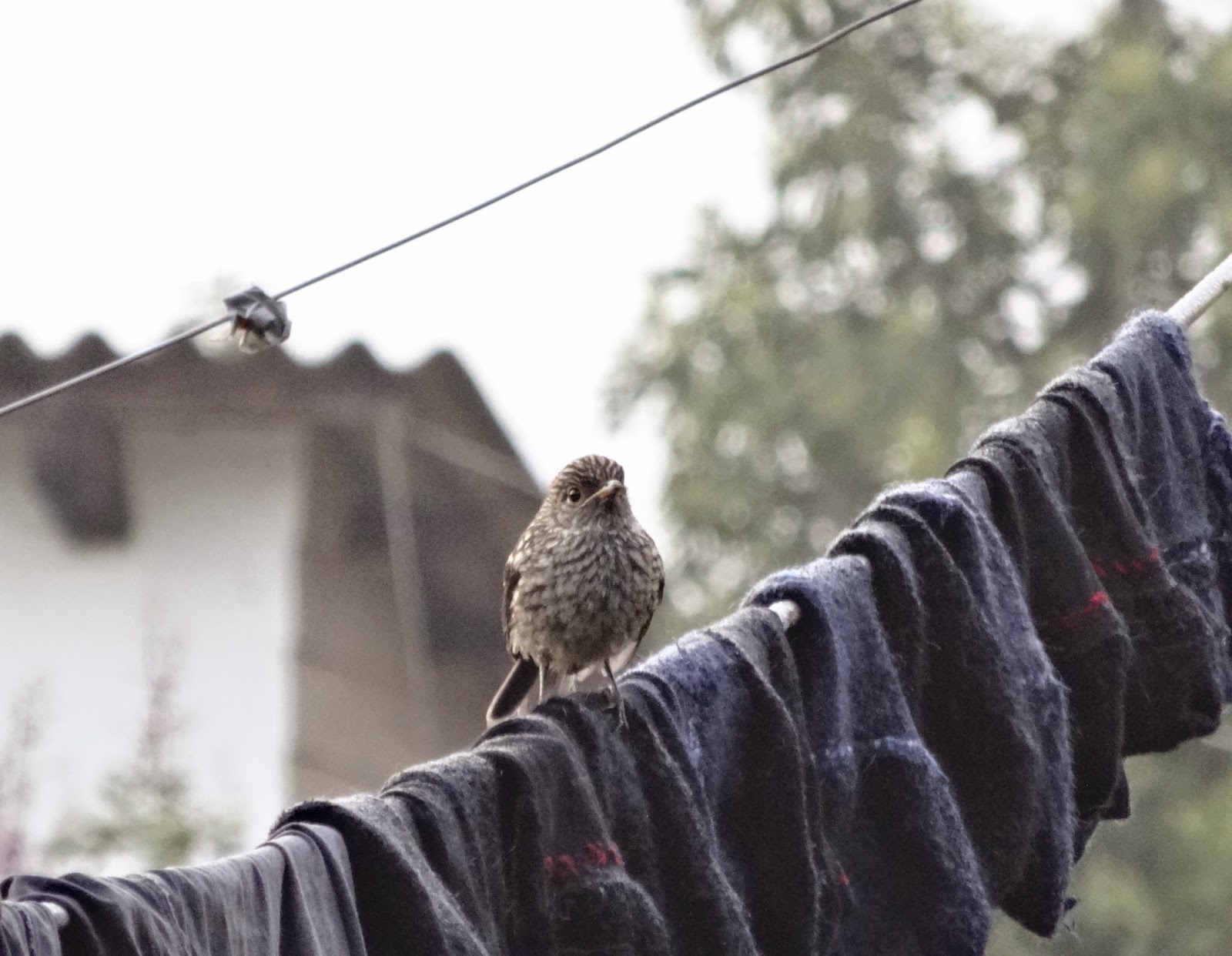
an adorable little fellow on our laundry

a Crane perched way up high

the Pied Crow: basically the pigeon of Kisoro

Thursday, October 16, 2014

Our Walk to Work

Kisoro District Hospital is just around the corner from our house. It's a very easy walk and one that we've done almost everyday since arriving. Here is a glimpse of that journey:

The view from our little porch

down the driveway...

past the bean-patch (which was just sprouting when we arrived)

take this little dirt road...

...to the main road in town

past a pretty typical Kisoro scene (sugar cane by bike, boda drivers {motorcycles} waiting for customers)

and through the hospital's front gate

our little office on a neater day


The hospital itself is spread among many one-story buildings on a fenced in campus. Pediatrics has its own building as does surgery, the outpatient department, and the male and female inpatient wards. I'm often working in our little DGH office in the pediatrics building and Katrina has gotten pretty familiar with the inpatient wards through the different clinics she has helped run.

Open-air paths (mostly covered because of the frequent rain!) connect all of the buildings. Alongside the paths and spread out on the grass are the families who have brought their sick loved-ones here. The nursing staff at KDH is notoriously overworked and underpaid (if they're paid at all!) and so much of the patient's care is left to the family. While medicines are nominally free (though frequently in short supply), families are responsible for bringing the patient's food, bedding, and sometimes even the mattress they'll sleep on.

Outside, women wash clothes and spread them in the sun to dry. Babies are rocked to sleep. Young girls make trips to the standing faucet to fill up big yellow plastic cans. Somehow, steaming pots of potatoes and beans get cooked and shared among groups seated in the grass or up against a building. Life outside the hospital buildings is a stark contrast to the dark, fetid hallways of the interior and the crowds of pensive, waiting people.


Sunday, October 5, 2014

The next crop

The beanstalks are slowly crawling from the ground up along their deftly placed bean poles. And five medical students have arrived by air and 9 hours of overland van to Kisoro! "Professor Jerry," as he is called here, is the man who started it all and holds it together. He'd landed just a few days ago but yesterday was our first sit down meeting with him at Traveler's Rest hotel. As we were waiting for him to wrap up the meeting with our colleague Moses, we watched the rap video being filmed under the veranda. We also played with Lucky, the new puppy at Traveler's and also with Moses's 5 year old sister Elizabeth, who told me she wanted to be a doctor when she grows up! Jerry, Andrew, Andrea, and I mostly talked about the many meetings to come -- whenever Jerry is in Kisoro there are meetings upon meetings upon meetings. I've heard it called a marathon meeting, but it seems more like a relay race to me. It will be very helpful to getting us up to speed with all of the various projects that are currently at varying levels of active. It was great to see him. Andrew snapped these great vistas on our way back. You can see volcanoes! (We saw four at once but it was hard to capture in the photo.)


As we were walking back a van filled with 5 mzungus and headed to our compound passed us by. We helped the new arrivals settle in and then took them to Sawa Sawa Guesthouse for dinner. While there was a good amount of moonlight to go by, the new recruits managed to pull their flashlights and headlamps from their suitcase to further illuminate the way. No one fell into any big puddles and we even caught our first glimpse of a big frog/toad who along with his sisters and brothers has been croaking an impressive night soundscape for the last 2 weeks. 

Saturday, October 4, 2014

Training Day

Esther and I reviewing answers to last week's test with the VHWs
One of our most interesting jobs with Doctors for Global Health is coordinating and teaching day-long training sessions for cohorts of Village Health Workers.

Nurse Spe teaching about immunizations
The VHWs travel from their villages (by foot or on the back of a hired motorbike) to attend three morning and two afternoon sessions designed to strengthen their healthcare knowledge. This week was the first of many training days that we are responsible for and, all things considered, it went pretty well.

We are very lucky to work with a team of Ugandan medical professionals who are also naturally-gifted teachers. They're all very good at connecting with the VHWs, asking good questions, and eliciting interesting conversations. This Friday was all about childhood immunization, respiratory illness, and a review of HIV data collected from neighboring villages.

Nurse Immaculate role-playing how to talk to parents who
haven't gotten their children immunized
Today, after a well-earned late wake up, we've repaired to a cafe on Kisoro's main drag to revise the lesson plans based on what we saw. This cafe's Americano -- the standard by which I judge any espresso-serving establishment -- is wonderfully good. The cafe has also turned out to be an excellent spot to weather today's torrential downpour.


Sam reviewing the latest HIV data

My Americano the next day

Wednesday, October 1, 2014

Sunrise on Crater Hill


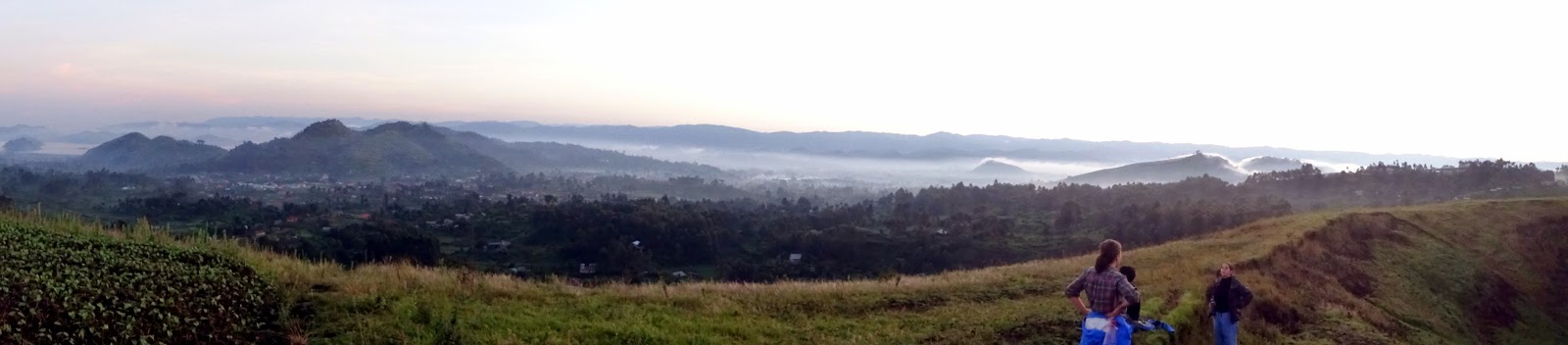
In addition to the colossal volcanoes that loom on the near horizon, there are steep green hills, patchy with terraced fields, all around the town. We climbed one of them -- Crater Hill -- yesterday at the break of dawn with two other doctors who live near us.

We left our compound in darkness. It was the clearest night the rainy season has given us and some stars and planets were still out. The walk to the hill and up its surprisingly sheer slope only took about 40 minutes. We were comfortably seated at the top, at the edge of the crater after which the hill is named in fact, when the sun broke over the horizon.

Our new home was spread out in front of us: the mist, pooled in the valleys slowing burnt off and the chickens and children started waking up.

As we walked down a few women passed us, heading up with bundles balanced on their heads and hoes over their shoulders. Reaching the top of the hill had felt like an achievement for me -- a day's work. Reaching the top only to begin a day's work tending the fields was unfathomable. Clearly, what I can fathom does not account for even a modest fraction of what is accepted as normal and necessary and fine around the world. I'm glad for the chance to see that.


The volcanoes Muhavura, Magahinga, and Sabyinyo